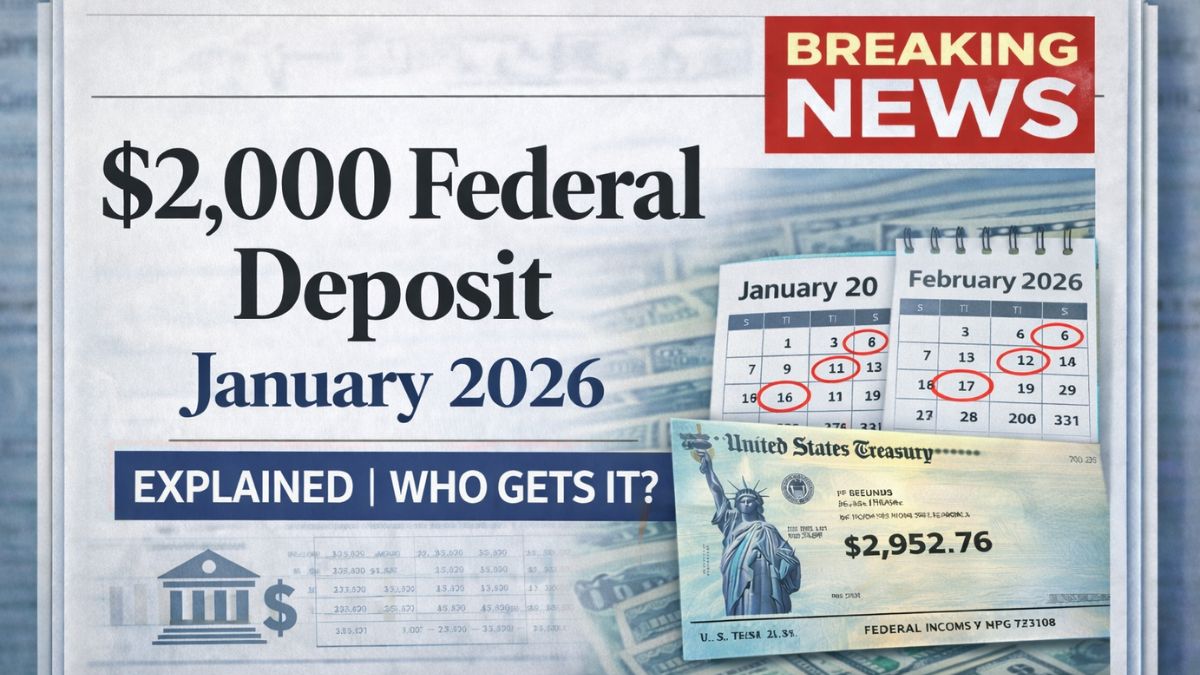
As January 2026 approaches, the federal government has confirmed a one-time $2,000 payment to help eligible Americans manage rising living costs. Expenses such as food, rent, utilities, and healthcare continue to strain household budgets, and this payment is designed to offer short-term financial relief. The payment is not a loan and does not need to be repaid. It is also separate from tax refunds, Social Security payments, or other government assistance programs.
Purpose of the One-Time Relief
The goal of the $2,000 payment is to provide quick financial support during a period of ongoing economic pressure. Many families are still adjusting to inflation and higher daily expenses. By using existing tax and benefit records, the government aims to deliver the payment efficiently without requiring most people to submit a new application.
Eligibility Requirements Explained
Eligibility for the payment is based on guidelines released by federal agencies in January 2026. The program mainly targets low- and middle-income individuals and families. People who filed recent tax returns and meet residency requirements are automatically reviewed. A valid Social Security number or taxpayer identification number is generally required. Some Social Security and federal benefit recipients may qualify automatically.

Income Limits and Phase-Out Rules
Income plays an important role in determining eligibility. Households below certain income limits can receive the full $2,000 amount. Those earning slightly above the limit may receive a reduced payment, while higher-income earners above the phase-out range may not qualify. Filing status and household details also affect eligibility.
Payment Schedule and Delivery Method
Payments will be sent in stages starting in January 2026. This staggered approach helps reduce delays and processing issues. Some payments may align with existing Social Security or benefit schedules. Direct deposit is the fastest way to receive the money, and those with bank details on file will likely be paid automatically. Others will receive a paper check by mail, which may take longer.
What Eligible Individuals Should Do
Most people do not need to take action, but it is important to keep bank and address information updated. Non-filers may need to use a government registration tool to provide basic details. Monitoring official updates helps ensure the payment is received without issues.

Final Thoughts
The confirmed $2,000 payment offers meaningful short-term support for millions of Americans. While it does not address long-term financial challenges, it can help households manage essential expenses during a difficult time.
Disclaimer
This article is for informational purposes only. It does not provide financial, tax, or legal advice. Eligibility rules, income limits, payment schedules, and program details may change based on official government guidance. Readers should consult the IRS, Social Security Administration, or other relevant federal agencies, or speak with a qualified professional for advice related to their individual situation.