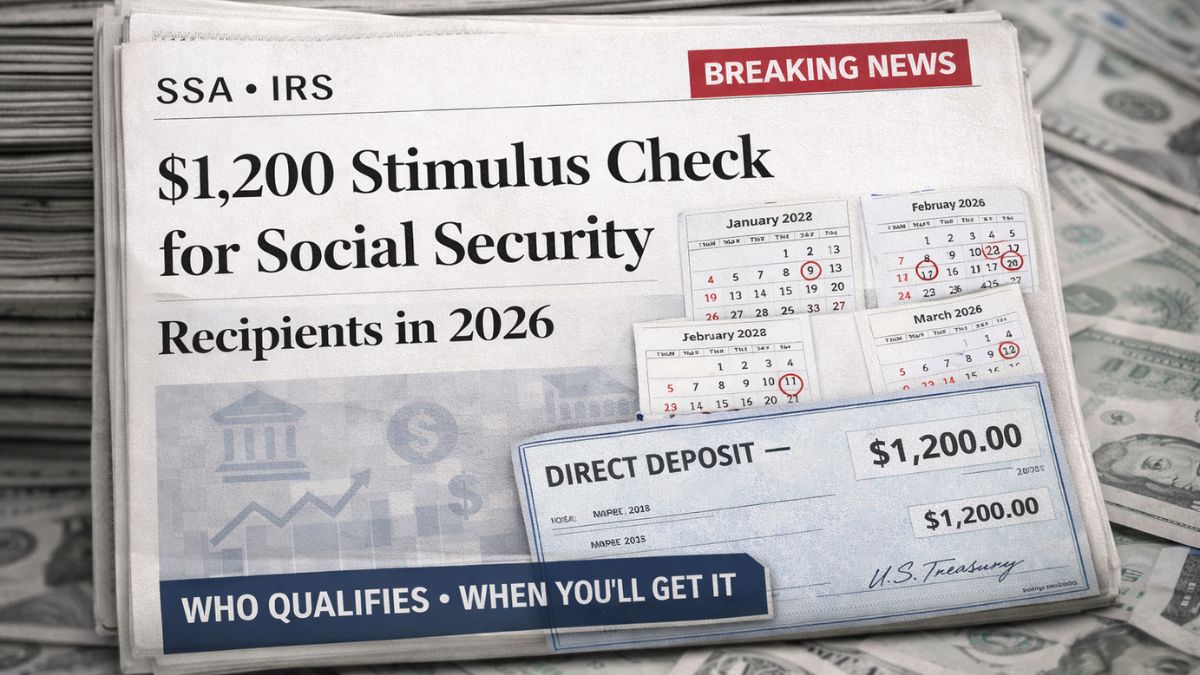
Rising living costs continue to affect millions of Americans who depend on Social Security benefits. Even though inflation has slowed in recent months, prices for basic needs like food, rent, medical care, and utility bills remain high. For seniors, people with disabilities, and low-income households, these costs are especially difficult to manage because their income is fixed. To help ease this pressure, federal authorities have confirmed a one-time $1,200 stimulus payment planned for 2026 for certain benefit recipients.
Why the $1,200 Payment Is Being Issued
While the overall economy has shown signs of recovery, many people who rely on federal assistance have not felt those improvements in their daily lives. Cost-of-living adjustments to Social Security benefits help to some extent, but they often do not fully match the real increase in household expenses. The $1,200 payment is intended as temporary relief to help beneficiaries cover urgent costs and reduce financial stress during a challenging period.

Who Is Eligible for the Payment
Eligibility for the stimulus payment is focused on people who already receive federal income support. This includes individuals receiving Supplemental Security Income, Social Security Disability Insurance, and Social Security retirement benefits. These groups are considered more vulnerable to rising costs because they have limited earning options. People with very low income who do not normally file tax returns are also included. Government agencies will use existing records to identify eligible recipients.
How and When Payments Will Be Sent

The $1,200 payment will be issued automatically. Beneficiaries will not need to apply, sign up, or submit any extra paperwork. Payments will be sent using the same method people already use for their regular benefits, such as direct deposit, Direct Express cards, or mailed paper checks. While an exact payment date has not yet been announced, officials expect distribution to begin sometime in 2026, with most recipients receiving their money within a few weeks of rollout.
How the Money Can Be Used
There are no limits on how the stimulus payment can be spent. Many recipients are expected to use the money for essential needs like groceries, rent, medical expenses, or utility bills. Others may use it to catch up on overdue payments or reduce debt. Past relief payments have shown that even a one-time amount can make a meaningful difference in household stability.

Staying Safe From Scams
Beneficiaries should be cautious of scams related to stimulus payments. Government agencies do not call, text, or email people to ask for personal or banking information. Any message requesting such details should be treated as suspicious.
Disclaimer

This article is for informational purposes only and does not provide financial, tax, or legal advice. Government programs, eligibility requirements, and payment timelines may change. Readers should refer to official Social Security Administration or IRS sources for the most accurate and up-to-date information about their individual situation.